

IPv4 History Visualization
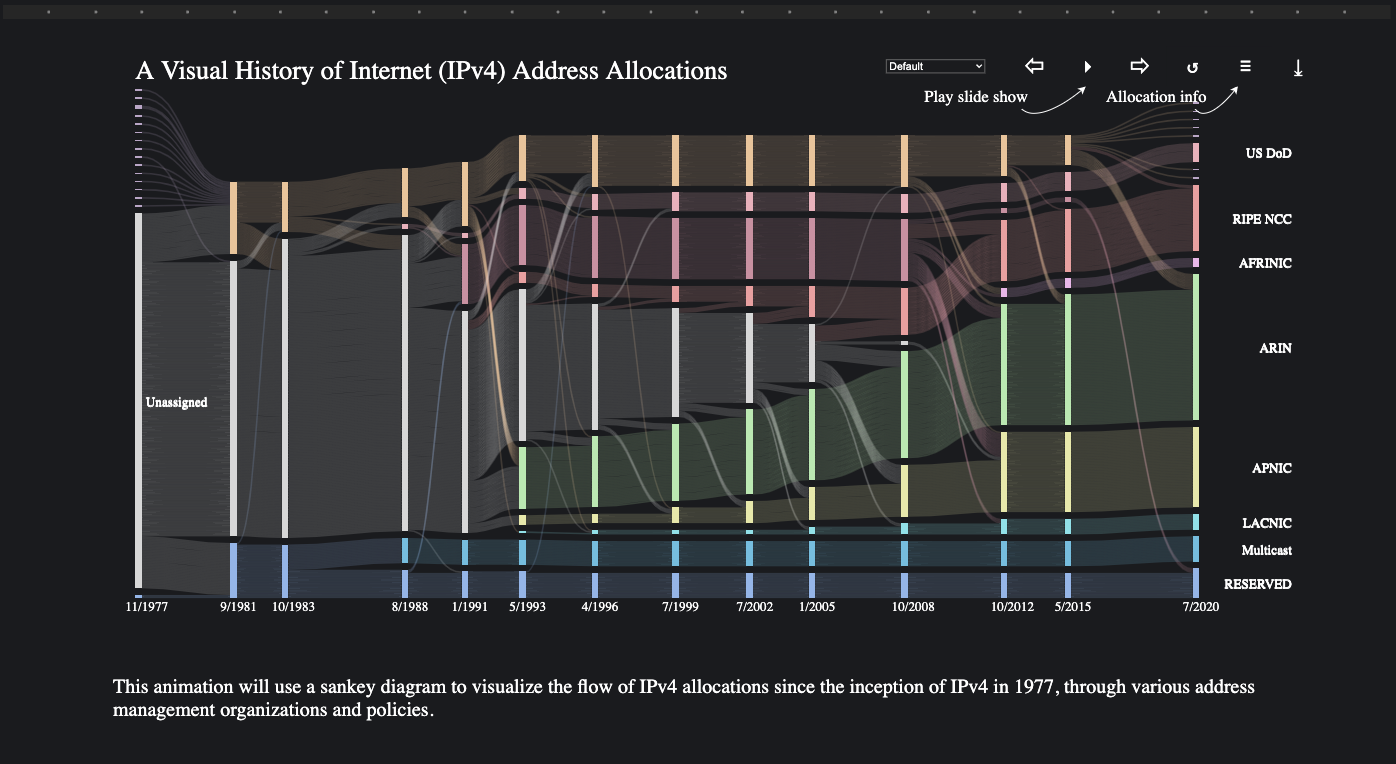
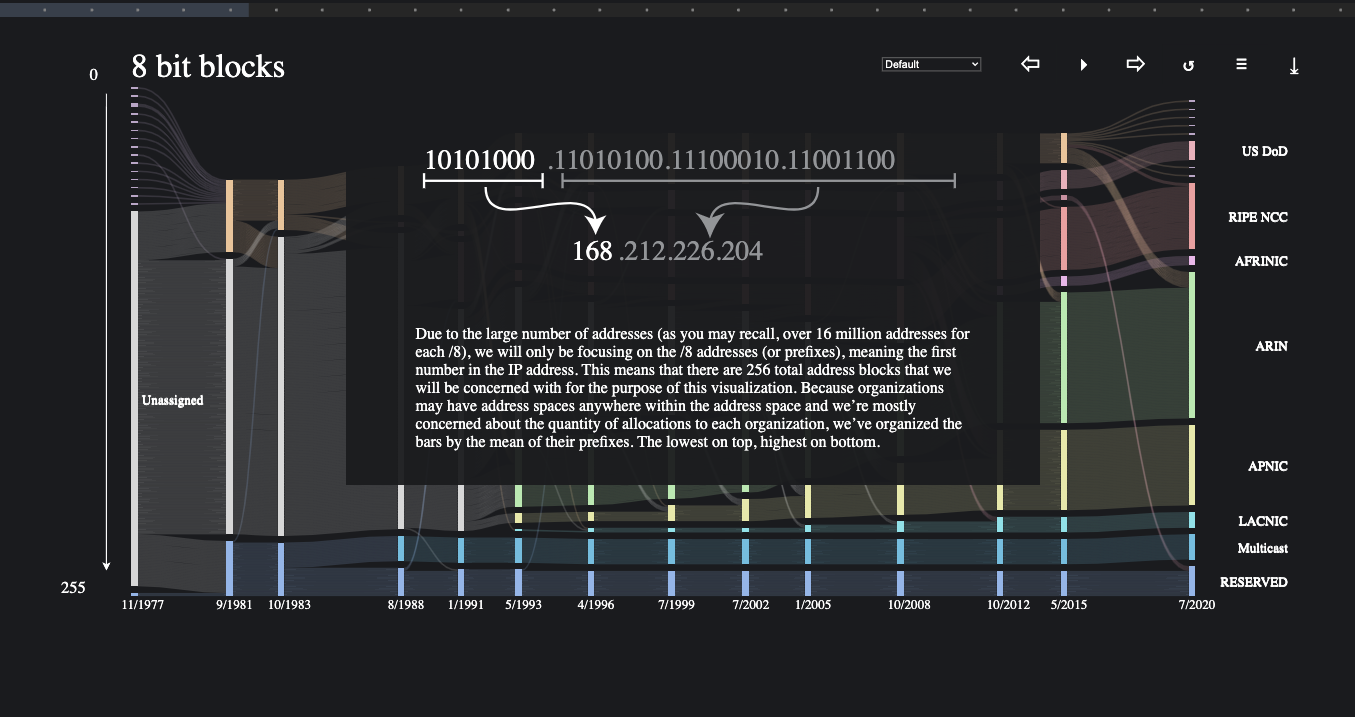
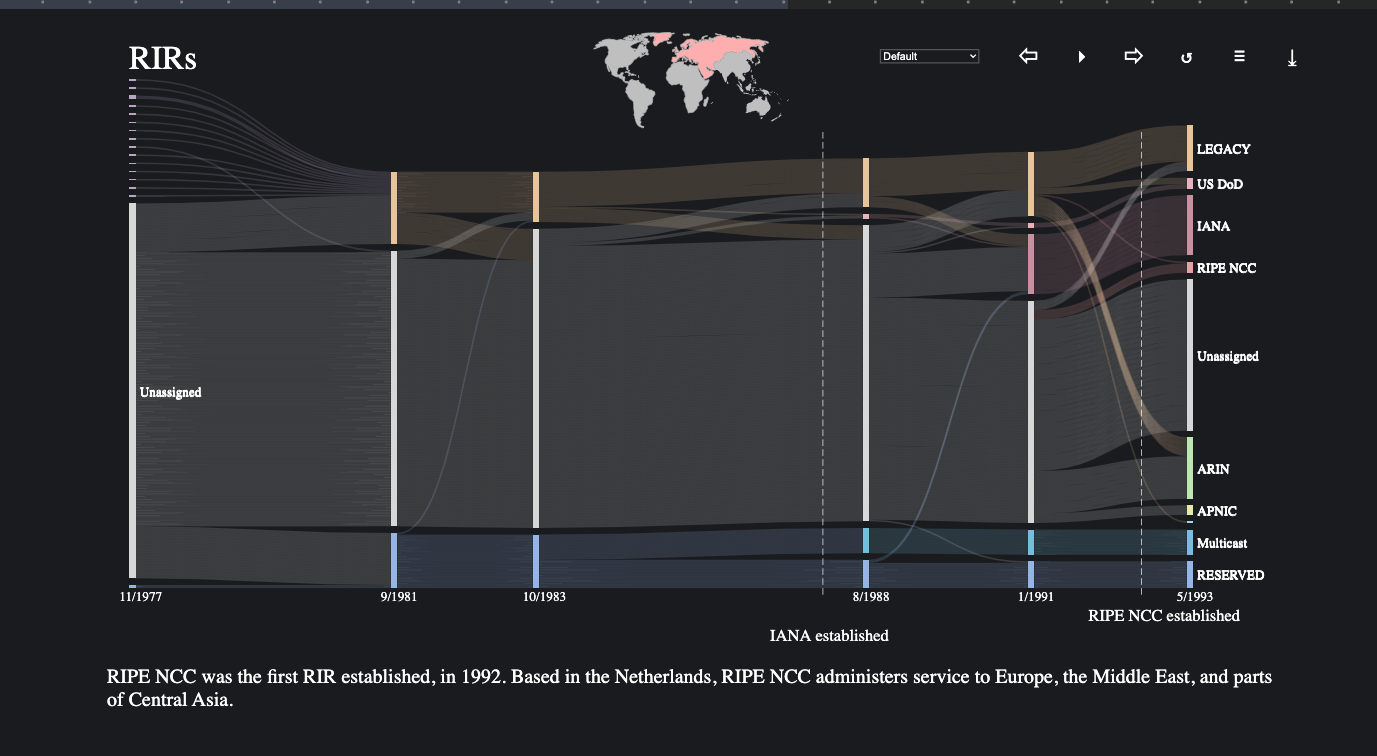
This visualization shows how the growing demand for those addresses transformed the governance model from a handful of scientists and engineers managing these addresses to the multi-stakeholder governance model we have today. IPv4 (the fourth version of the Internet Protocol) is the governing standard of today's Internet. Similar to any other network, unique identifiers play an integral role in Internet routing. We group IP address blocks based on the organization that regulates its allocation as recorded in IANA's IPv4 address space file and the RFC.
Please view the visualization at: https://www.caida.org/publications/visualizations/ipv4-history/
Screenshots of the visualization
This was created with the support of the National Science Foundation (NSF). For any questions or comments on this project, please contact info@caida.org.